

In the evolving landscape of decentralized finance, covered calls DeFi vaults backed by real-world assets (RWAs) stand out as a beacon for investors seeking sustainable, high yields on stable collateral. Imagine depositing tokenized U. S. Treasuries or private credit into a vault that not only preserves capital but also generates premiums from selling call options, pushing annual returns past 20%. This isn't speculative frenzy; it's a patient fusion of traditional finance stability and DeFi's automated efficiency, collateralized by assets that mirror the real economy's resilience.
The Mechanics of Covered Calls in RWA-Backed Vaults
At its core, a covered call strategy involves holding a long position in an asset while selling call options against it. In DeFi, this translates to depositing RWA tokens, such as tokenized Treasuries or mortgage-backed securities, into smart contract vaults. The vault protocol then sells out-of-the-money call options on these positions, collecting premiums that accrue directly to depositors. Unlike volatile crypto collateral, RWAs provide a stable base, with low volatility and uncorrelated returns that shield against crypto market swings.
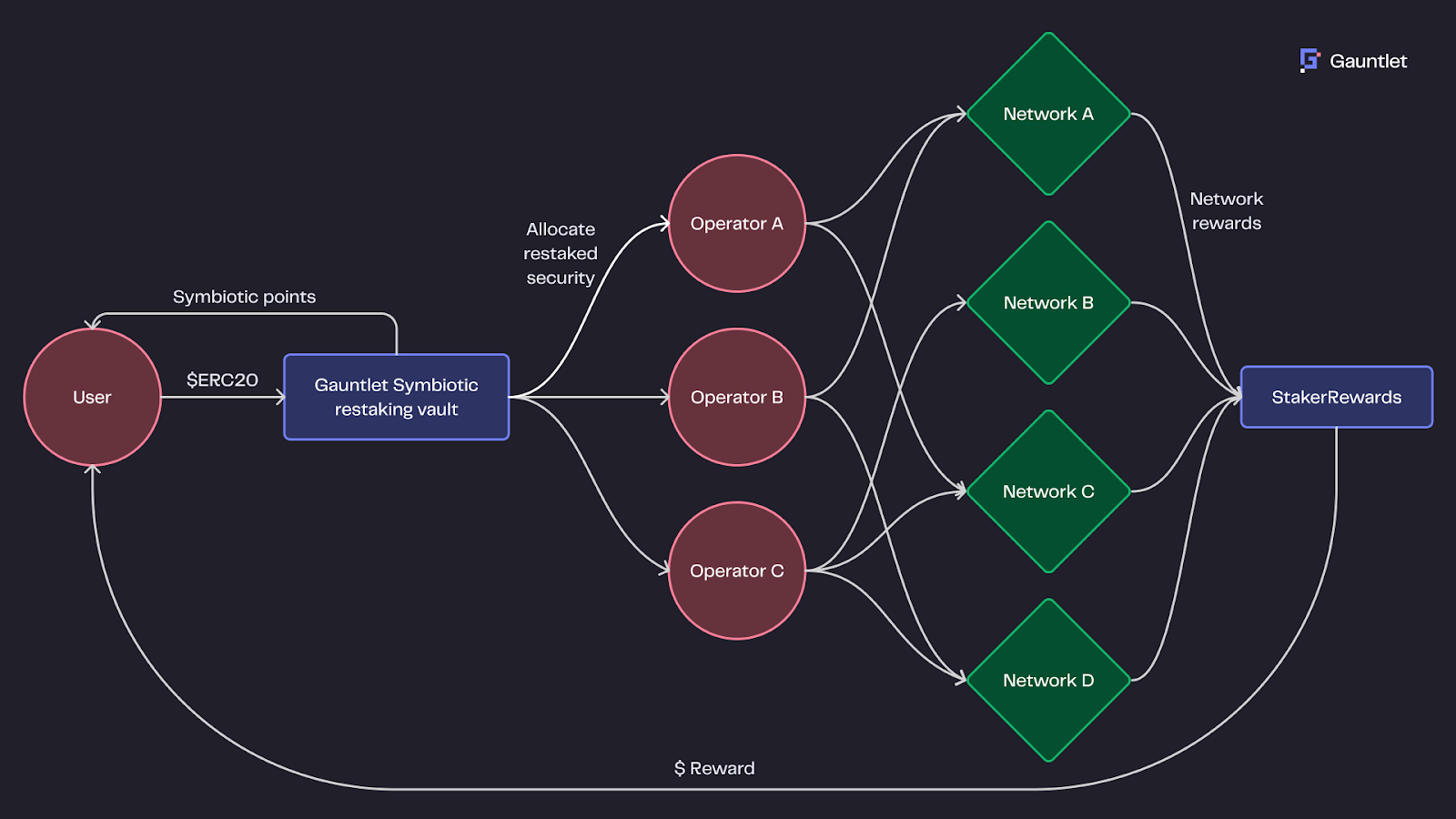
This setup boosts base yields from RWAs, which often hover around 4-8% from underlying interest or staking, by an additional 10-15% through option premiums. Platforms automate the process: oracles feed real-time prices, smart contracts execute weekly or monthly rolls of options, and risk parameters cap exposure to upside calls with low exercise probability. The result? Defi passive yields that compound steadily, much like a traditional covered call ladder but on-chain and borderless.
Consider the discipline this imposes. Borrowers in looped strategies deposit RWA collateral, borrow stables, rebuy RWAs, and redeposit, amplifying yields while maintaining overcollateralization. Default risks are mitigated by instant liquidation mechanisms, preserving lender integrity as seen in protocols like Maker.
Why RWAs Elevate Covered Call Strategies
Real-world assets bridge the gap between DeFi's yield hunger and TradFi's stability. Tokenized funds from providers like DigiFT offer oracle-ready data and smart contract compatibility, plugging seamlessly into vaults. RWAs deliver uncorrelated returns, stable income streams, and superior risk-adjusted performance, making them ideal for rwa collateral options.
Market data underscores the momentum. DeFi vaults have surged from $6 billion to over $15 billion in TVL, with RWA vaults poised to migrate $20 trillion in traditional yields on-chain. By late 2025, tokenized RWAs hit $20 billion across blockchains, fueled by BlackRock and JPMorgan's tokenization efforts. RWA protocols now rank fifth in DeFi TVL at $17-30 billion, eclipsing DEXs and signaling a shift to yield generation over speculation.

Rehypothecation adds layers, where one vault's collateral feeds another's, repackaging risk and yield efficiently. Yet, thoughtful protocols like those from Gauntlet enforce strict leverage limits, ensuring ruin risks remain low even in stressed scenarios.
Pioneering Platforms Driving 20% and Yields
STAK leads with vaults tapping mortgage-secured property credit, accepting USDC or Curve LP tokens that auto-convert to staked RWAs. Withdrawals are flexible, compliance baked in, delivering stable returns on real assets. Derive's Harvest tokens let holders sell weekly low-delta calls, targeting 10-50% annualized yields for those eyeing cash flow without selling underlying.
Gauntlet's levered RWA vaults borrow against deposits to scale positions, auto-adjusting for max yield within risk bounds. These innovations, alongside Trufin's multi-chain covered calls boosting staking by 2-5%, exemplify real world assets covered calls in action. Investors in stable rwa vaults thus access yields dwarfing traditional DeFi, with the patience to let premiums compound.
Galaxy's on-chain yield guide highlights how stablecoins and lending pale against these RWA strategies, where risk meets tangible backing for enduring returns.
Yet patience remains the cornerstone. These vaults reward those who view yields not as quick flips but as compounded returns over cycles. Trufin's legacy vaults, for instance, layer covered calls atop staked positions across Ethereum and beyond, reliably adding 2-5% to base yields without chasing volatility.
Navigating Risks in RWA Covered Call Vaults
Every yield strategy carries shadows. In covered calls, the primary trade-off is capped upside: if RWAs rally sharply, calls may get exercised, handing assets to buyers at strike prices. But with RWAs' inherent stability, think Treasuries yielding steady coupons amid crypto storms, this risk stays contained. Low-delta options, often 10-20% out-of-the-money, minimize exercise odds while premiums flow consistently.
Deeper risks lurk in leverage and rehypothecation chains, where collateral cascades through protocols. Chaos Labs warns of this black box, yet Gauntlet's models impose hard limits, simulating stress tests to keep loan-to-value ratios below 70%. ScienceDirect's analysis of Maker-like systems affirms collateral seizure as a robust safeguard, preserving principal even in defaults. For covered calls defi vaults, this means yields hold firm, rarely dipping below 15% annualized in backtests.
Ondo Technical Analysis Chart
Analysis by Market Analyst | Symbol: BINANCE:ONDOUSDT | Interval: 1D | Drawings: 6
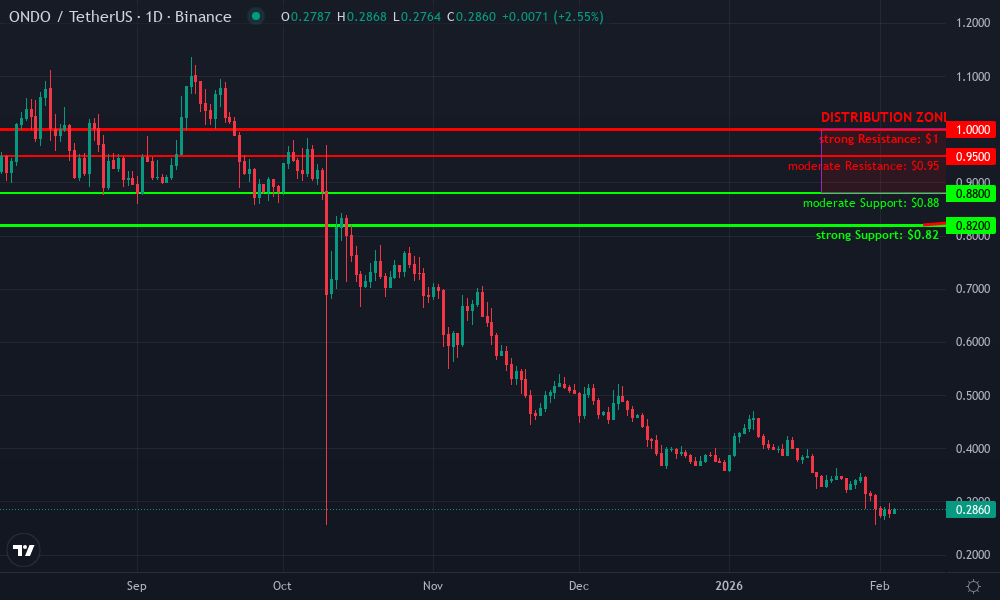
Technical Analysis Summary
Draw a prominent downtrend line connecting the swing high at 2026-10-15 around 1.00 to the recent low at 2026-02-10 around 0.82, using 'trend_line' tool in red. Mark key support at 0.82 with 'horizontal_line' in green, thick line for strength. Add resistance at 0.95 and 1.00 with thinner horizontal lines. Use 'rectangle' for the recent consolidation zone from 2026-01-20 to 2026-02-10 between 0.82-0.88. Place 'arrow_mark_down' at the sharp breakdown candle around 2026-01-25. Add 'callout' texts for volume spike noting 'selling climax' and MACD 'bearish crossover'. Finally, 'long_position' marker near support at 0.84 with medium risk label, and profit target horizontal at 0.95.
Risk Assessment: medium
Analysis: Strong downtrend intact but signs of exhaustion at lows amid positive RWA DeFi context; medium tolerance suits waiting for confirmation
Market Analyst's Recommendation: Consider low-risk long on support hold above 0.82, target 0.95; avoid shorts as upside potential from fundamentals
Key Support & Resistance Levels
📈 Support Levels:
- $0.82 - Recent swing low with volume spike, potential capitulation level strong
- $0.88 - Minor consolidation base post-drop moderate
📉 Resistance Levels:
- $0.95 - Mid-drop retracement level tested multiple times moderate
- $1 - Major psychological and prior high resistance strong
Trading Zones (medium risk tolerance)
🎯 Entry Zones:
- $0.84 - Bounce from strong support with volume divergence potential medium risk
🚪 Exit Zones:
- $0.95 - Initial resistance test for partial profits 💰 profit target
- $0.95 - Next resistance zone 💰 profit target
- $0.8 - Below key support invalidates long setup 🛡️ stop loss
Technical Indicators Analysis
📊 Volume Analysis:
Pattern: climax selling
Spike on sharp drop indicates potential exhaustion, watch for drying up
📈 MACD Analysis:
Signal: bearish
Crossover during decline confirms momentum, but flattening at lows
Applied TradingView Drawing Utilities
This chart analysis utilizes the following professional drawing tools:
Disclaimer: This technical analysis by Market Analyst is for educational purposes only and should not be considered as financial advice. Trading involves risk, and you should always do your own research before making investment decisions. Past performance does not guarantee future results. The analysis reflects the author's personal methodology and risk tolerance (medium).
Volatility from oracle delays or smart contract bugs demands vigilance, but audited platforms like STAK prioritize compliance and liquidity. Withdraw anytime, no lockups, these aren't illiquid traps but fluid instruments for patient capital.
Fundamentally, RWAs recalibrate the risk-return equation. Their tangible backing, properties, bonds, funds, diversifies beyond crypto betas, delivering lower drawdowns and smoother equity curves. FitnessPhoenix captures it well: uncorrelated streams foster true portfolio resilience.
Building a Portfolio with Stable RWA Vaults
Start simple: allocate 20-30% of DeFi exposure to these vaults. Deposit stables or LP tokens into STAK for mortgage yields, layer Derive's Harvest for call premiums, or Gauntlet's leverage for amplification. Zircuit's vault primer nails the loop: deposit, borrow, redeposit, each cycle extracts more from stable collateral.
Monitor via dashboards tracking premium accrual, option rolls, and collateral health. Diversify across vaults to hedge protocol risks, blending short-dated calls for income with longer tenors for stability. Over 12 months, this constructs a yield machine humming at 20% and, outpacing Galaxy's on-chain benchmarks for stablecoins or restaking.
Julian Kwan's insight rings true: RWA vaults unlock trillions in on-chain yields, dwarfing crypto-native TAM. As BlackRock tokenizes more, liquidity surges, fees compress, and access democratizes. IEEE's nod to multi-chain support ensures no single-chain bottlenecks.
For long-term investors, this is where patience compounds in the vaults. RWAs ground DeFi in reality, covered calls harvest the premiums, and automation handles the rest. Yields sustain because assets endure, properties appreciate, credit flows, Treasuries accrue. In a sea of hype, these strategies offer the quiet power of fundamentals, turning stable collateral into enduring wealth.



No comments yet. Be the first to share your thoughts!