
Defi options vaults 2026: The structural shift
By 2026, DeFi options vaults have evolved from experimental yield aggregators into the primary infrastructure for on-chain market making. Unlike traditional staking, which offers static returns, these vaults leverage smart contracts to automate complex derivatives strategies, primarily selling vanilla call and put options to capture premiums. This shift allows retail investors to access institutional-grade yield generation without managing individual positions or monitoring volatility surfaces.
The core mechanism behind these vaults is the automated execution of predefined strategies. As noted in industry guides, a DeFi vault is a smart contract that accepts user deposits and automatically executes these blockchain-based yield strategies without manual intervention. This automation removes the friction of manual trading, allowing capital to compound continuously through the collection of option premiums, even in sideways or mildly trending markets.
However, this yield comes with distinct risk profiles. The majority of these vaults revolve around selling options, which exposes users to tail risk during extreme market volatility. Professional market makers often manage these risks through dynamic hedging, but retail-focused vaults may lack the same depth of risk management. Understanding the specific strategy—whether it is a simple covered call or a more complex iron condor—is essential for evaluating whether the yield justifies the exposure.
Defi options vaults 2026 choices that change the plan
AI-driven yield farming in DeFi options vaults promises superior returns, but the strategy introduces distinct risks that differ sharply from traditional staking. Unlike simple staking, where you lock assets to support network security, options vaults involve selling volatility. This means you are taking on the risk of adverse price movements in exchange for premium income. Understanding these tradeoffs is essential before allocating capital.
1. Volatility Exposure vs. Passive Stability
Traditional staking offers predictable, albeit modest, rewards based on network inflation or transaction fees. Options vaults, however, generate yield from the volatility of the underlying asset. If the market remains range-bound, premiums accumulate steadily. However, a sudden, sharp move against your position can erase weeks of gains in hours. This is not passive income; it is active risk management.
2. Smart Contract and Strategy Risk
Staking smart contracts are generally simpler and more battle-tested. Options vaults rely on complex logic to manage strike prices, expiration dates, and rebalancing. A bug in the vault’s code or a failure in the oracle data feeding the AI strategy can lead to significant losses. You are trusting not just the blockchain, but the specific algorithmic logic of the vault provider.
3. liquidity and exit limits to account for
Many options vaults lock your funds until the option expires or until you manually withdraw. This creates a liquidity mismatch. If you need your capital quickly during a market crash, you may be forced to sell at a loss or wait out the expiration cycle. Traditional staking often allows for unbonding periods, but options vaults can have no exit path until the contract resolves.
4. Counterparty and Protocol Risk
While DeFi is non-custodial, options vaults often interact with multiple protocols: lending platforms, DEXs, and options markets. Each interaction point is a potential failure vector. If one connected protocol suffers a hack or a liquidity crunch, the vault’s performance can be severely impacted. Diversification across vaults can mitigate this, but it also complicates yield tracking.
| Factor | Traditional Staking | AI Options Vault |
|---|---|---|
The choice between staking and options vaults depends on your risk tolerance. Staking is for capital preservation and steady growth. Options vaults are for investors willing to accept high volatility for the chance of outsized returns. Always audit the vault’s strategy and smart contract history before depositing.
How to choose an AI-driven options vault
Selecting a vault requires looking past the headline APY. These platforms use algorithms to sell options against your deposited assets, capturing premiums while managing downside risk. The strategy is not passive staking; it is an active market-making operation executed by code.
To evaluate these vaults, follow this decision framework. Each step addresses a specific risk factor that determines whether the yield is sustainable or a temporary liquidity trap.
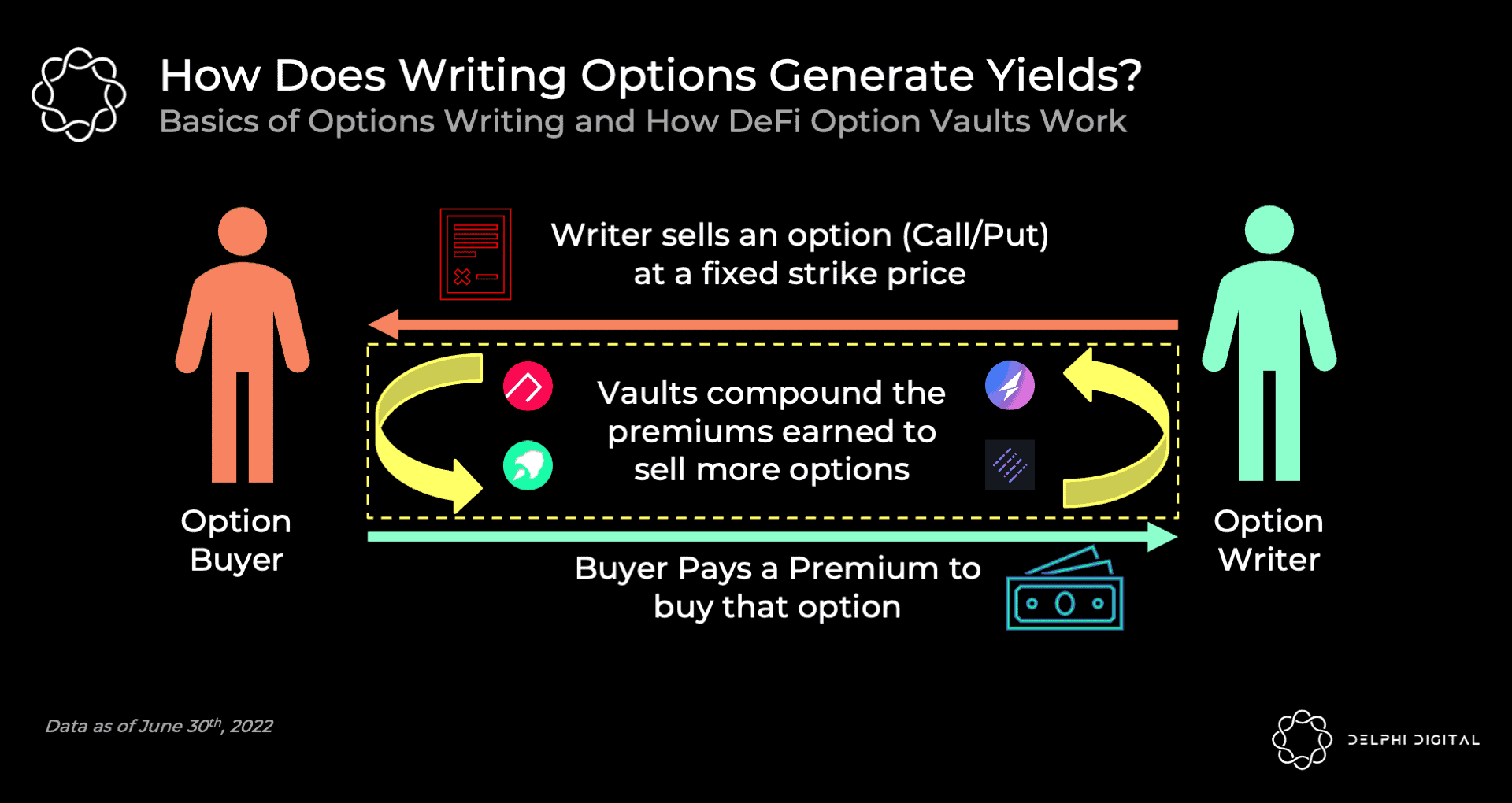
Most AI vaults sell vanilla call and put options. This means you are effectively acting as the insurance provider for the market. If the market moves sharply against your sold options, the vault absorbs the loss. Check the documentation to ensure the strategy is transparent. Avoid vaults that use opaque "black box" logic where the risk exposure is unclear.
The AI’s intelligence is visible in how it picks strikes. Conservative vaults sell out-of-the-money (OTM) options, offering lower yields but higher safety margins. Aggressive vaults sell at-the-money (ATM) or in-the-money (ITM) options for higher premiums but greater risk of capital loss. Your choice should match your risk tolerance, not just the yield number.
AI-driven vaults interact with multiple protocols, increasing the attack surface. Look for vaults that have undergone formal audits by reputable firms like OpenZeppelin or Trail of Bits. Check if the code is verified on block explorers. Unaudited code in a high-frequency trading strategy is a significant liability.

Unlike traditional staking, options vaults may lock your assets during active option periods. Understand the withdrawal mechanics. Can you exit immediately, or are there cooldown periods? High liquidity ensures you can exit before a market crash erodes your principal. Low liquidity vaults often promise higher yields to compensate for this restriction.
| Feature | Conservative Vault | Aggressive Vault |
|---|---|---|
| Option Type | Out-of-the-Money (OTM) | At-the-Money (ATM) or In-the-Money (ITM) |
| Yield Potential | Moderate (5-15% APY) | High (20-50%+ APY) |
| Downside Risk | Low (Premium cushions small drops) | High (Capital erosion during sharp moves) |
| Best For | Capital preservation with steady yield | Experienced traders seeking alpha |
The difference between a profitable vault and a drained wallet often comes down to these structural choices. Prioritize transparency and security over the highest advertised yield.
Watchouts for Weak DeFi Options Vaults
The DeFi options vault space is crowded with projects promising outsized returns through AI-driven yield farming. While the technology is real, the marketing often obscures the risks. Before committing funds, you need to distinguish between robust strategies and those that are essentially high-risk speculation wrapped in financial engineering.
1. The "AI" Label Trap
Many vaults slap an "AI" label on basic delta-neutral strategies. True AI involves dynamic hedging and real-time risk assessment. Most advertised AI vaults simply run static algorithmic strategies that fail during high volatility. Check if the vault uses machine learning for adaptive hedging or just automated trading bots. If the documentation doesn't explain the model, it's likely a gimmick.
2. Over-Reliance on Vanilla Options
According to Paradigm, the majority of these vaults revolve around selling vanilla call and put options. While this generates steady premium income, it exposes you to tail risks. If the market crashes or moons unexpectedly, these vaults can suffer significant drawdowns. Look for vaults that incorporate exotic options or multi-leg strategies to mitigate this exposure.
3. Hidden Smart Contract Risks
DeFi vaults are smart contracts. They are immutable once deployed, meaning bugs are fatal. Ensure the vault has been audited by reputable firms like Trail of Bits or OpenZeppelin. Avoid vaults that rely on unaudited third-party integrations or complex cross-chain bridges, which increase the attack surface for exploits.
4. Liquidity and Exit Barriers
Some vaults impose high withdrawal fees or lock-up periods to maintain strategy integrity. This can trap your capital during market downturns. Always check the withdrawal terms. A vault that promises high yields but makes it difficult to exit is often designed to protect the protocol, not the investor.
Defi options vaults 2026: what to check next
Before committing capital to AI-driven yield strategies, it helps to separate the marketing hype from the mechanics. These vaults are not magic money printers; they are automated market-making tools with specific risk profiles. Understanding the underlying structure prevents costly surprises during market volatility.
What is the DeFi price prediction for 2026?
Predicting exact token prices is impossible, but the DeFi sector is shifting from speculative growth to utility-driven yield. Analysts expect 2026 to be defined by institutional adoption of onchain vaults that blur the line between traditional finance and crypto. The focus is moving toward stablecoin yields and real-world asset tokenization rather than pure leverage.
What is the best DeFi platform for options vaults?
There is no single "best" platform, as the ideal choice depends on your risk tolerance and asset preference. Ribbon Finance remains a leading option for structured products selling weekly covered calls. Meanwhile, platforms like Steakhouse Financial and Gauntlet are gaining traction for their sophisticated stablecoin vault strategies. Always compare the specific smart contract audits and fee structures of each protocol.
Is DeFi illegal in the US?
DeFi itself is not illegal in the United States, but the regulatory landscape is complex. The SEC and CFTC are actively scrutinizing platforms that may be classified as unregistered securities exchanges. While using non-custodial wallets to interact with DeFi protocols is generally permissible, users must remain aware of tax obligations and potential restrictions on interacting with sanctioned addresses or unregistered entities.
Does DeFi have a future?
Yes, but the form of DeFi is evolving. The era of simple liquidity mining bonuses is fading, replaced by sustainable yield models. 2026 is projected to see onchain vaults mature into standard asset management tools, offering transparent, automated strategies that compete with traditional hedge funds. The future lies in compliance-friendly, institutional-grade infrastructure rather than anonymous, high-leverage speculation.
No comments yet. Be the first to share your thoughts!