
What DeFi options vaults actually do
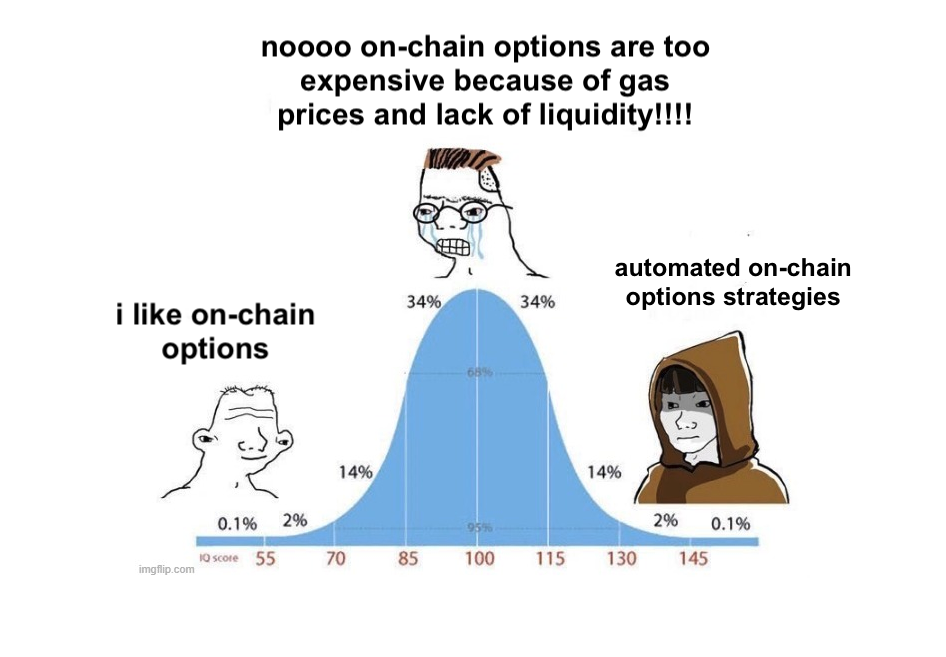
You’ve likely seen high APYs on stablecoin pools and wondered why the returns seem too good to be true—or why they suddenly drop to near zero when the market shakes. Traditional yield farming often relies on lending fees or liquidity mining incentives, both of which are fragile. When volatility spikes, these models often break or become unprofitable. DeFi options vaults (DOVs) offer a different path by monetizing that very volatility rather than just holding assets.
DeFi options vaults are automated smart contracts that allow you to deposit crypto assets, which the vault then uses to sell options against your holdings. Instead of waiting for interest payments from borrowers, the vault generates yield by collecting option premiums. This process effectively converts the uncertainty of market prices into a steady income stream for depositors.
Think of this process like selling insurance. When you deposit assets into a DOV, you are essentially acting as the underwriter. You are selling the right for someone else to buy or sell your assets at a specific price. In exchange, you receive an immediate premium. If the market stays within a certain range, you keep the premium and your assets. If the market moves significantly, the options may be exercised, but you still retain the premium collected, which often cushions the impact.
This mechanism distinguishes DOVs from simple staking or lending. While lending relies on the demand to borrow, DOVs rely on the demand to hedge or speculate. As noted by QCP Capital, these vaults "effectively monetise the high volatility of the underlying asset and inject this yield into Defi through the payment of option premiums." This makes them particularly useful in sideways or choppy markets where directional bets are risky, but volatility remains high.
The automation is key. You don’t need to manually set strike prices or expiration dates. The smart contract handles the strategy execution, selecting the appropriate options contracts based on the vault’s predefined risk parameters. This lowers the barrier to entry, allowing users to access institutional-grade options strategies without needing to understand the complex Greeks or order book dynamics.
How covered calls and puts generate yield
DeFi Options Vaults (DOVs) generate yield by selling options against the underlying asset held in the vault. The strategy depends on your market outlook. If you expect the price to stay flat or rise slightly, you sell covered calls. If you expect the price to stay flat or fall slightly, you sell cash-secured puts.
Covered calls for neutral or bullish outlooks
A covered call involves selling a call option while holding the underlying asset. This strategy works best when you believe the asset price will remain stable or appreciate moderately. The premium collected from selling the call provides immediate income, which lowers your effective entry cost or boosts returns during sideways markets.
In a DOV, this is automated. The smart contract holds the asset and sells the call option at a strike price above the current market price. If the asset stays below the strike price at expiration, the option expires worthless. The vault keeps the premium and the asset, ready to sell another call. This is the "neutral" part of the strategy: you earn yield without selling your position.
If the asset rises above the strike price, the option is exercised. The vault sells the asset at the strike price. You keep the premium and the profit from the asset's rise up to the strike price. However, you miss out on any gains above that level. This is the trade-off: capped upside in exchange for immediate income. For example, if you hold ETH and sell a call with a 20% strike, you earn the premium regardless, but if ETH moons 50%, you only profit up to the 20% mark.
Cash-secured puts for neutral or bearish outlooks
A cash-secured put involves selling a put option while holding enough stablecoin or cash to buy the underlying asset if assigned. This strategy is ideal when you are willing to own the asset at a lower price, or when you expect the market to remain stable. The premium collected is yours to keep if the option expires worthless.
In a DOV, the vault holds the cash equivalent of the put's strike price. If the asset stays above the strike price at expiration, the option expires worthless. The vault keeps the premium as yield. This is the "neutral" outcome: you earn income without acquiring more of the asset.
If the asset falls below the strike price, you are assigned. The vault uses the cash to buy the asset at the strike price. You now hold more of the asset, but your effective cost basis is lower than the current market price because of the premium received. This is the "bearish" outcome: you acquire the asset at a discount. For instance, if the strike price is $2,000 for ETH and the market price drops to $1,800, you still buy at $2,000, but the premium reduces your net cost.
The vault cycle in practice
The mechanics of a DOV follow a repetitive cycle. Here is how the automated strategies execute in practice:
Users deposit crypto assets (like ETH or BTC) or stablecoins into the vault. The smart contract locks these assets, preparing them for the options strategy. This is the initial capital deployment.
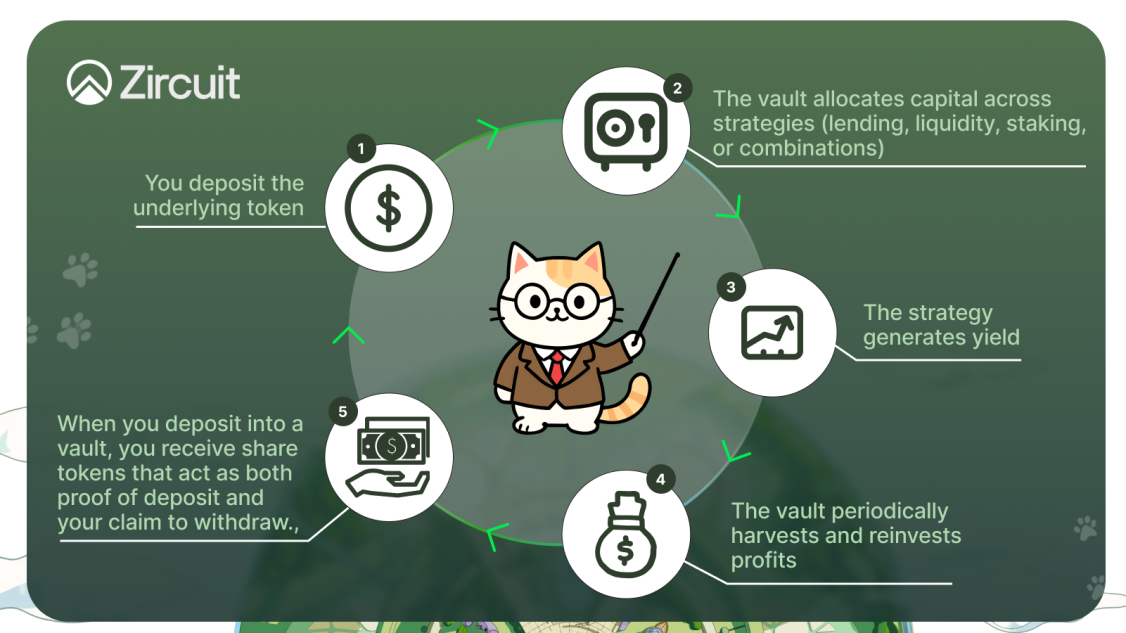
The vault automatically sells options based on the selected strategy. For covered calls, it sells calls against the held crypto. For cash-secured puts, it sells puts backed by stablecoins. The strike price and expiration date are set by the strategy parameters.
The premium from the sold option is credited to the vault immediately. This is the primary source of yield. The premium is distributed to vault shareholders proportionally, often added to their share value or distributed as a token.
At expiration, the option is either exercised or expires worthless. If exercised, the asset is sold (call) or bought (put). The vault then rebalances and repeats the cycle, selling new options with the updated holdings.
Key considerations and risks
While DOVs offer automated yield, they carry specific risks. The primary risk is opportunity cost. In a strong bull market, covered calls cap your upside. You might miss out on significant gains if the asset surges past your strike price. Conversely, in a sharp bear market, cash-secured puts can lead to buying the asset at a price higher than the market value, although the premium mitigates this loss.
Another risk is smart contract risk. DOVs rely on complex smart contracts to automate the options strategies. Bugs or vulnerabilities in the code could lead to loss of funds. Additionally, liquidity risk can arise if the underlying asset or the options market becomes illiquid, making it difficult to close positions or settle obligations at favorable prices.
Finally, the yield is not guaranteed. The premium collected depends on market volatility. In low-volatility environments, premiums are lower, resulting in lower yields. In high-volatility environments, premiums are higher, but the risk of assignment (and thus potential loss of upside or forced purchase) also increases. Always assess your risk tolerance and market outlook before investing in a DOV.
Comparing top DeFi options vault protocols
The primary symptom of choosing the wrong DeFi Options Vault (DOV) is strategy mismatch. You might lock capital into a protocol that only supports European-style options when you need American-style flexibility, or deposit into a vault that doesn't support your preferred asset like Solana or Arbitrum. The fix is to audit the protocol's core mechanics before depositing.
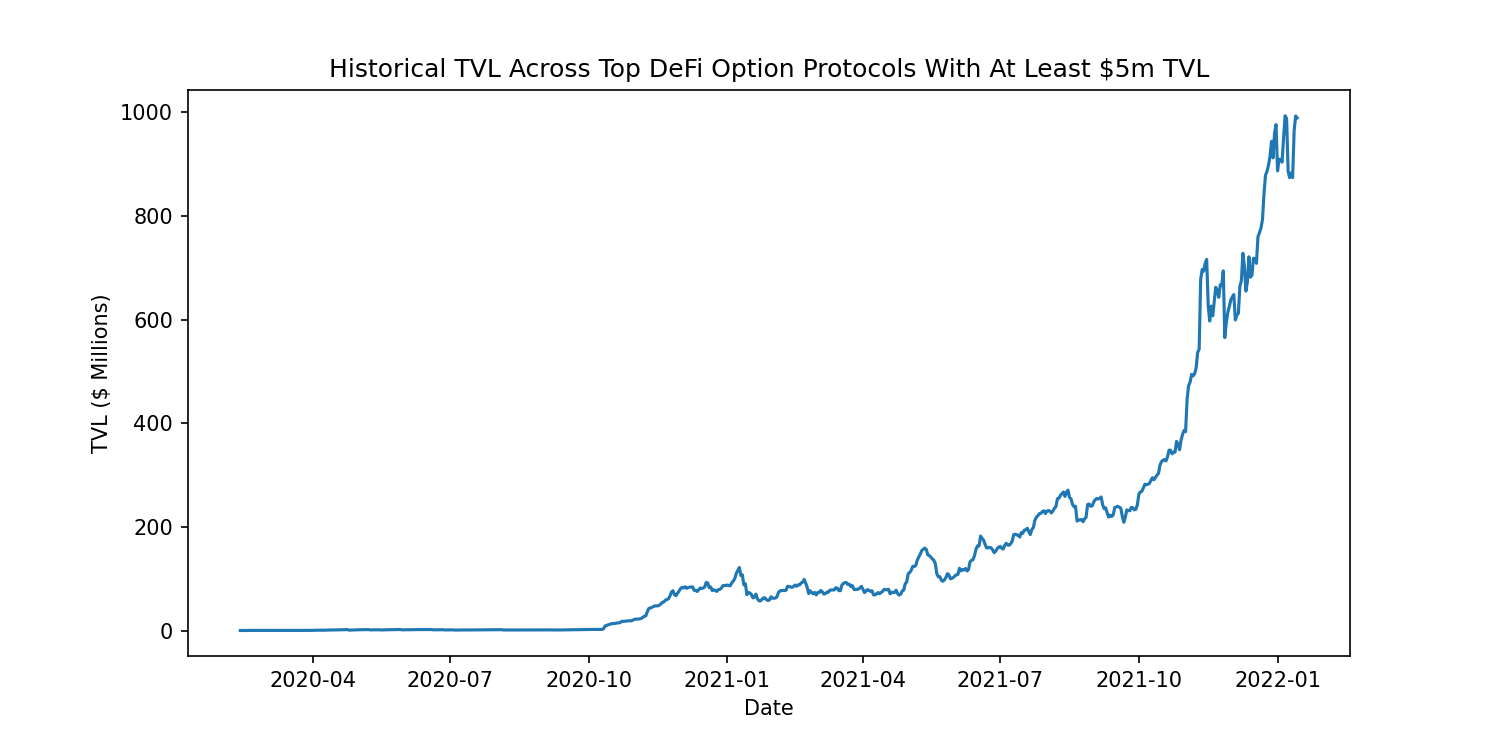
Ribbon Finance, the pioneer of the DOV model, offers high flexibility with American-style options and support across multiple chains, making it suitable for diverse portfolios. Typus Finance, by contrast, focuses on European-style, cash-settled options, which simplifies the payout structure but limits exercise timing. Other protocols often specialize in specific chains or asset types, creating a fragmented landscape where no single vault dominates all use cases.
To navigate this, compare protocols based on three hard constraints: TVL (liquidity depth), supported assets/chains, and option style. A comparison table below breaks down the leading options vaults. Use this to filter out protocols that don't support your base asset or preferred blockchain.
| Protocol | TVL (Approx.) | Chains | Option Style | Min. Deposit |
|---|---|---|---|---|
| Ribbon Finance | $150M+ | Ethereum, Arbitrum, BSC | American | Variable |
| Typus Finance | $50M+ | Ethereum, Arbitrum | European | Variable |
| Lyra Finance | $100M+ | Ethereum, Optimism, Arbitrum | American | Variable |
| Thetanuts Finance | $30M+ | Ethereum, Arbitrum | European | Variable |
How to verify before depositing:
- Check TVL on DefiLlama: Use DefiLlama's Options Vaults page to see real-time TVL rankings. Low TVL often means lower liquidity and higher slippage on exits.
- Confirm Option Style: Read the docs. American-style (Ribbon, Lyra) allows early exercise, which can be useful in volatile markets. European-style (Typus, Thetanuts) settles only at expiration, simplifying risk but removing early exit options.
- Verify Chain Support: Ensure the vault supports your native chain (e.g., Arbitrum, Optimism, BSC). Cross-chain bridging adds complexity and risk.
If you need maximum flexibility and asset diversity, Ribbon is the safest starting point. If you prefer simpler, cash-settled payouts on specific chains, Typus or Thetanuts may offer better yield efficiency. Always start with a small deposit to test the withdrawal process.
Risks in automated options strategies
DeFi Options Vaults (DOVs) automate premium collection, but automation introduces specific failure modes. The primary risks are smart contract vulnerabilities, volatility exposure, and the "Friday problem"—liquidity gaps that occur at weekly expiration. Understanding these symptoms helps you assess whether a vault fits your risk tolerance.
Smart Contract and Execution Risk
DOVs are immutable smart contracts. If the code contains a bug or is exploited, funds can be lost permanently. Unlike centralized platforms, there is no customer support to reverse transactions. Always verify if the vault’s code has been audited by reputable firms and if there is a bug bounty program in place. Additionally, consider the counterparty risk of the underlying protocol managing the options positions.
Volatility and Impermanent Loss
High volatility increases premium income but also raises the risk of adverse price movements. When the underlying asset moves sharply against your position, the vault may be forced to sell assets at a loss to cover obligations. This can lead to impermanent loss, where the value of your deposited assets decreases compared to simply holding them in a wallet.
The Friday Problem
The "Friday problem" refers to liquidity and execution timing issues that arise on weekly expiration dates. As noted by Paradigm, DOVs often face significant slippage or inability to close positions efficiently at 00:00 UTC on Fridays. This can result in suboptimal execution prices or failed trades, directly impacting your yield. Check if the vault uses auctions or alternative mechanisms to mitigate this risk.
Checks and Fixes
Before depositing, verify the following:
- Audit Status: Ensure the smart contract has been audited by a top-tier firm.
- Liquidity Depth: Check if the vault has sufficient liquidity to handle weekly expirations without excessive slippage.
- Strike Selection: Understand how the vault chooses strikes. Conservative strategies may offer lower yields but reduce the risk of adverse price movements.
- Emergency Protocols: Verify if the vault has a pause mechanism or emergency withdrawal feature in case of a hack or market anomaly.
Checklist for Evaluating DeFi Options Vaults
Before depositing into a DeFi options vault, verify that the strategy aligns with your risk tolerance and market outlook. Automated yield strategies can generate consistent returns, but they also carry specific smart contract and market risks that require due diligence.
- Review the strategy logic: Ensure the vault uses a transparent, audited smart contract. Look for official audit reports from reputable firms like CertiK or OpenZeppelin to verify code security.
- Assess the underlying asset: Check which assets the vault accepts (e.g., ETH, USDC) and how they are deployed. Understand if the strategy is directional (betting on price movement) or neutral (collecting premiums).
- Understand the fee structure: Calculate the management fee and performance fee. High fees can erode yield, especially in low-volatility markets.
- Check liquidity and exit terms: Verify if there are lock-up periods or withdrawal fees. Ensure you can exit the position without significant slippage or penalties.
- Evaluate historical performance: Look at real, on-chain data rather than projected APY. Check if the strategy has performed well across different market conditions (bull, bear, and sideways).
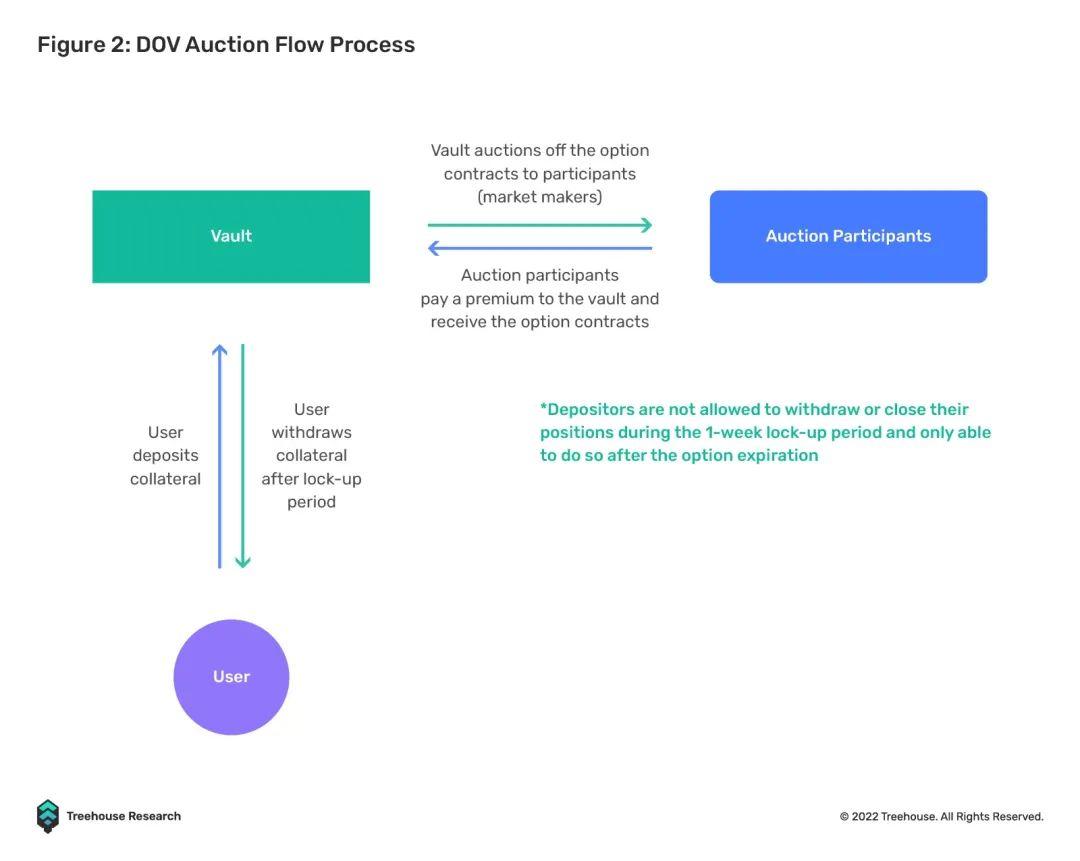
DeFi options vaults simplify option investment strategies by allowing participants to stake assets in a vault while earning yield without manual intervention. However, this automation requires trust in the underlying protocol. Always start with a small test deposit to understand the mechanics before committing significant capital.
Quick checklist
-
Match the strategy to your outlookEnsure the vault’s option strategy (covered call or cash-secured put) aligns with your market view and risk tolerance.
-
Check the materialChoose a material that handles heat, washing, and regular use without becoming a chore.
-
Plan the cleanupAvoid anything that needs more maintenance than you are likely to give it.
-
Keep one fallbackHave a simple backup option for rushed days.
No comments yet. Be the first to share your thoughts!