
What DeFi options vaults do
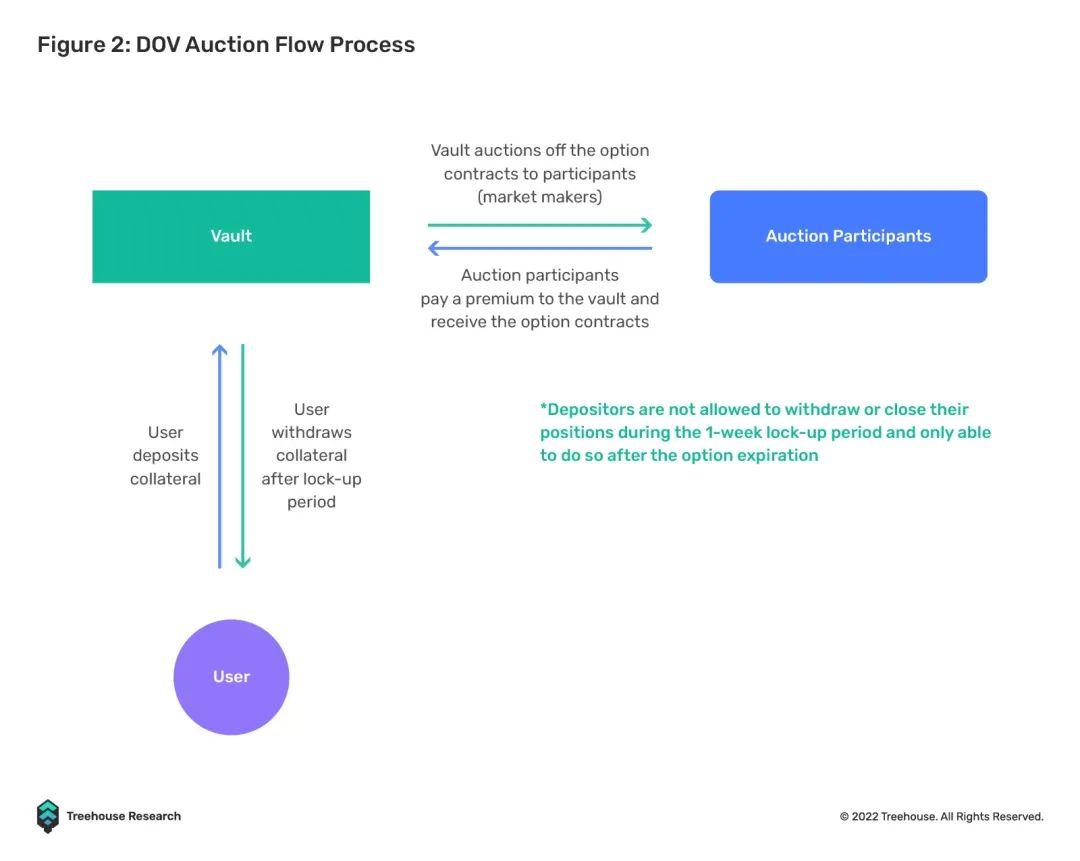
DeFi options vaults collect premiums by selling options against collateral, generating yield through structured derivative contracts rather than simple lending. While traditional lending protocols generate interest from borrowing fees, options vaults act as market makers, assuming the obligation to buy or sell an asset at a set price in exchange for upfront premium payments.
The mechanism works by locking collateral—typically stablecoins or blue-chip tokens like ETH—into a smart contract. The vault then automatically sells put or call options against that collateral. If the underlying asset price moves unfavorably, the vault absorbs the loss or delivers the underlying asset; if the price stays within the agreed range, the vault keeps the premium. This creates a yield stream that is mathematically distinct from the time-value decay of loans.
Ribbon Finance and similar protocols have pioneered this structure, allowing onchain exposure to complex financial instruments without manual trading. The vault handles the Greeks, strike selection, and expiration management, turning what was once an institutional-grade strategy into a passive income vehicle for retail participants.
Choose your underlying asset
Selecting the right collateral determines your risk profile and potential yield. Most DeFi options vaults revolve around selling vanilla call and put options in exchange for premiums, but the underlying asset dictates how much volatility you are exposed to. Your choice should align with your market view and risk tolerance.
Ethereum (ETH)
ETH is the most common collateral for options vaults due to its deep liquidity and established derivatives markets. It offers high premium potential because of its significant price swings. However, this volatility also increases liquidation risk if the position becomes underwater. ETH is best for investors who understand crypto cycles and can tolerate short-term drawdowns for higher yields.
Wrapped Bitcoin (WBTC)
WBTC tracks Bitcoin’s price, offering a more stable alternative to ETH. While premiums are generally lower than ETH due to Bitcoin’s relative stability, the risk of rapid liquidation is reduced. This asset suits conservative investors seeking steady income with less exposure to altcoin-style volatility. It is ideal if you believe Bitcoin will remain range-bound or trend slowly.
Stablecoins (USDC, DAI)
Stablecoins provide the lowest risk profile but also the lowest premium potential. Since their value does not fluctuate, options strategies on stablecoins are rare and typically involve synthetic volatility or complex cross-asset pairs. If a vault offers stablecoin collateral, it is likely focused on arbitrage or lending rather than pure options selling. Choose this only if capital preservation is your primary goal and you accept minimal yield.
| Asset | Volatility | Premium Potential | Liquidation Risk |
|---|---|---|---|
| ETH | High | High | High |
| WBTC | Medium | Medium | Medium |
| Stablecoins | Low | Low | Low |
The strategy logic aims to balance fee income with price variation. Vaults often allocate to pools that combine stablecoins or liquid staking tokens, where prices are tightly correlated. When choosing your underlying, consider whether you want to capture volatility (ETH) or avoid it (Stablecoins). Always verify the vault’s specific collateral requirements, as some institutional products, like those built on Rysk Protocol, may restrict eligible assets to ensure sufficient liquidity for option settlement.
Set strike price and expiry
Configuring the strike price and expiration date determines how your capital behaves. These two parameters act as the steering mechanism for the vault, dictating whether the strategy prioritizes steady premium collection or allows for upside participation. Ribbon Finance and other structured vault protocols use these settings to define the risk profile of the underlying options contracts.
Choose the strike price
The strike price is the threshold at which the option contract becomes active or settles. It creates a direct trade-off between income generation and market exposure.
- Out-of-the-money (OTM) strikes: Setting a strike price above the current market price (for calls) or below it (for puts) typically generates higher premium income. This approach is conservative; you collect fees even if the price doesn't move much, but you miss out on significant gains if the asset rallies sharply.
- At-the-money (ATM) strikes: An ATM strike offers a balance. The option is more likely to be exercised, providing moderate income with higher sensitivity to price movements. This is suitable if you expect moderate volatility.
- In-the-money (ITM) strikes: These are less common for pure yield generation but can be used to replicate direct asset exposure with leverage. They offer the least premium income but the highest correlation to the underlying asset's price.
Select the expiration date
The expiration date determines how long your capital is locked into the position. Shorter durations allow for more frequent compounding of premiums, while longer durations provide stability but reduce flexibility.
- Weekly expirations: These are ideal for capturing high-frequency volatility. They allow the vault to adjust its position quickly in response to market changes, maximizing premium collection in volatile conditions. However, they require more frequent rebalancing.
- Monthly expirations: This is the standard for most DeFi options vaults. It offers a good balance between premium yield and operational efficiency, reducing the transaction costs associated with frequent rollovers.
- Longer-term expirations: Less common in automated vaults, these are used for specific hedging strategies or when market volatility is expected to be low over a longer period.
Align with your market view
Before locking in these parameters, assess your outlook for the underlying asset. If you are bullish, you might choose a call option with a strike price slightly above the current price. If you are neutral, an OTM put or call can generate income regardless of direction. The goal is to match the strike and expiry to your conviction level, ensuring the vault's automated strategy aligns with your risk tolerance.
Fund and monitor the vault
Deploying capital into a DeFi options vault requires a precise sequence of approvals and deposits. Once the position is active, the vault operates autonomously, but you must monitor the underlying strategy logic to ensure it balances fee income with price drift.
Connect your wallet to the vault interface. Approve the underlying asset (e.g., USDC or ETH) for the vault contract, then deposit your collateral. The vault will mint position tokens representing your share of the options strategy.
Check the blockchain explorer or the vault dashboard to confirm your position is live. Ensure the vault has allocated your funds to the intended options pool, such as a stablecoin or liquid staking token pair.
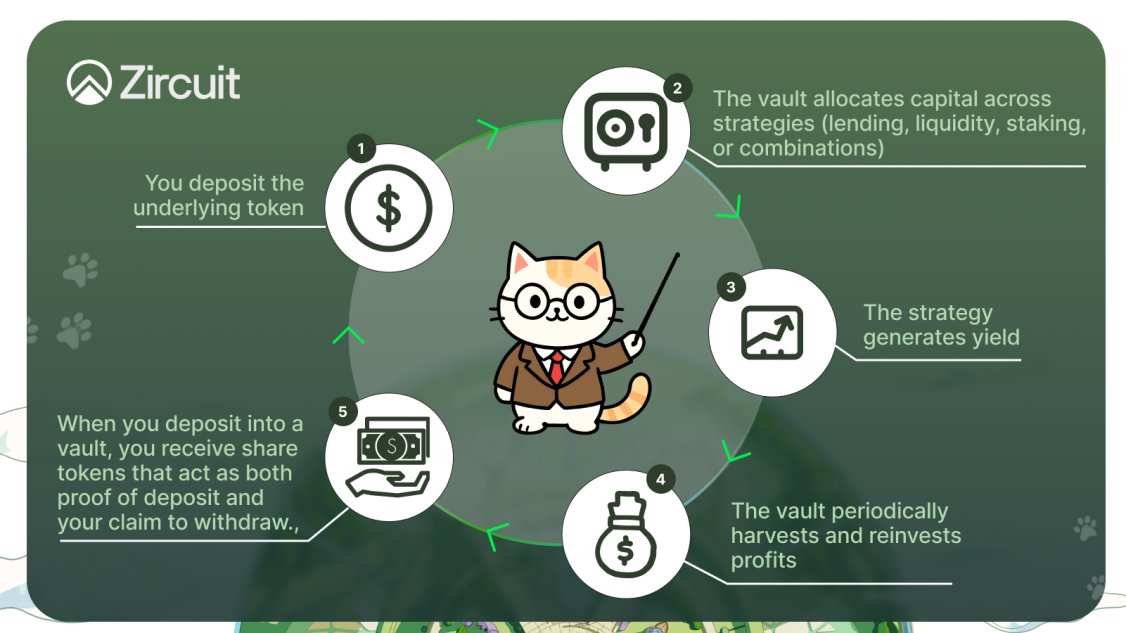
Track realized and unrealized profit and loss. Vaults periodically sell incentives or expired options to compound the position. Review the strategy logic to ensure it remains aligned with your risk tolerance and market conditions.
DeFi vaults allow institutions to earn yields on stablecoins without managing crypto directly, blurring the line between traditional finance and decentralized protocols. However, this automation requires vigilance. You must understand how the vault collects fees and claims protocol incentives, as these mechanisms drive the compound growth of your position.
If the strategy drifts too far from its target correlation, the vault may need to rebalance. This involves selling off current positions and reallocating to new options contracts. While this process is often automated, you should verify that the rebalancing logic matches your expectations for risk and return.
Manage downside risk
DeFi options vaults are not passive savings accounts; they are active trading engines that can liquidate your position if the underlying asset price trends sharply against your premium collection. Most vaults sell vanilla calls or puts to generate yield, which means you are short volatility. When volatility spikes or prices trend sharply, the delta of your short options increases, requiring more collateral to maintain the position. If your collateralization ratio drops below the protocol's threshold, the vault’s smart contract will automatically liquidate your assets, often at a loss.
To mitigate this, you must monitor the health of your position in real-time. Check the collateralization ratio and the current mark price of the underlying asset against your strike prices. If the price moves unfavorably for your short option, you may need to add more collateral or close the position early to prevent liquidation. This is not a set-and-forget strategy; it requires active management or automated risk protocols that adjust your strikes based on market conditions.
Smart contract risk is equally critical. Even if you manage the market risk perfectly, a bug in the vault’s code can lead to total loss. Always verify that the vault’s smart contracts have been audited by reputable firms like OpenZeppelin or Trail of Bits. Look for public audit reports and check if the project has a bug bounty program. Do not deploy capital into unaudited or newly deployed contracts, no matter how high the yield appears.
-
Verify smart contract audits from reputable firms
-
Monitor collateralization ratio daily
-
Set up alerts for price movements near strike prices
-
Check exit liquidity for your specific pool
Common questions about options vaults
Options vaults manage and settle options contracts, enabling on-chain exposure to structured financial instruments. Unlike standard yield farms, these vaults require a specific understanding of how derivatives interact with liquidity pools. Below are the most frequent questions regarding mechanics, safety, and returns.
No comments yet. Be the first to share your thoughts!